Accurate centrifuge operation is essential for the reliability of laboratory experiments. Centrifuge calibration is the process that ensures that the centrifuge’s performance meets the standards of precision and reliability required in various laboratory environments. At GlanLab, we believe that understanding the calibration process is essential to maintain the accuracy of your laboratory tests and ensure consistent, high-quality results. This guide will provide an in-depth understanding of centrifuge calibration, including why it matters, when to calibrate, how to carry out the calibration, common errors, and how to maintain proper documentation for compliance purposes.
Calibration is often confused with maintenance, but they serve different purposes. Maintenance refers to the regular upkeep of the centrifuge to ensure it operates smoothly, while centrifuge calibration focuses on verifying that the machine is providing accurate and reliable results by checking its speed, temperature, and timer. These are key factors that affect the efficiency and accuracy of the centrifuge’s performance.
What Lab Calibration Is and Why It’s Important
Centrifuge calibration ensures that the centrifuge operates within the desired specifications, contributing to the accuracy and consistency of results. Calibration is integral to maintaining the overall performance of the centrifuge and helps meet the requirements of laboratory quality management systems such as ISO 15189 and GLP/GMP (Good Laboratory Practice/Good Manufacturing Practice).
Consistency and Performance
When a centrifuge is properly calibrated, it consistently produces results within acceptable limits. Calibration ensures that the centrifuge operates at the correct speed (RPM), maintains accurate temperature settings, and performs within the required timeframes. This consistency is crucial, especially when working with sensitive samples that require precise conditions for proper processing.
Quality Management and Compliance
Calibration is also a vital aspect of laboratory quality management systems. For laboratories aiming to meet ISO 15189, GLP, or GMP standards, regular centrifuge calibration is a requirement. It helps ensure that lab equipment meets the highest standards for accuracy and reliability, which is essential for audits, regulatory compliance, and maintaining customer trust. Proper calibration records also demonstrate due diligence and adherence to industry best practices.
When Should You Calibrate Your Centrifuge?
Centrifuge calibration is not a one-time task; it must be performed periodically to maintain accuracy. The calibration schedule depends on several factors, including the frequency of use, the type of centrifuge, and the manufacturer’s recommendations. Below are some general guidelines for calibration frequency.
Recommended Calibration Frequency
Annually: For standard centrifuges that are used frequently, calibration should be performed once a year. This ensures that the centrifuge continues to meet performance standards and that any potential issues are addressed early.
Semi-Annually or Quarterly: If your centrifuge is used extensively or in demanding environments (e.g., research labs, clinical labs), you should consider calibrating it every six months or quarterly. Regular use can lead to wear and tear that affects performance, so frequent checks ensure optimal operation.
After Major Repairs or Relocation: Any significant repairs, maintenance, or relocation of the centrifuge require recalibration. Changes in the physical setup or mechanical components can alter the centrifuge’s performance, making recalibration necessary.
Calibration Based on Usage
For labs with specific needs (e.g., high-throughput labs), calibration may need to be performed more frequently, even after every few hundred cycles. Depending on the type of centrifuge and the level of precision required, the calibration schedule should be adjusted to maintain accuracy.
Step-by-Step Calibration Process
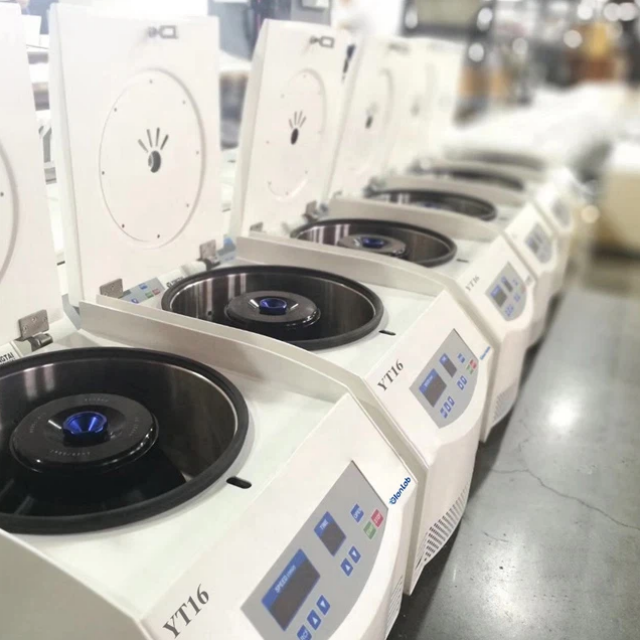
Calibrating a centrifuge involves several steps to ensure that it performs to the required specifications. Below is a step-by-step guide to calibrate your centrifuge effectively:
Table 2: Calibration Workflow & Tools
Step | Key Action | Tools Needed | Expected Result |
Pre-check | Verify manual & PPE | Manual, gloves | Safe start |
Speed calibration | Measure and adjust RPM | Tachometer | Accurate RPM |
Timer check | Test duration accuracy | Stopwatch | Correct timing |
Temperature check | Validate temperature control | Digital probe | Precise temperature |
Step 1: Pre-check and Safety Setup
Before starting the calibration process, make sure you have the proper personal protective equipment (PPE) in place, such as gloves and safety goggles. Also, verify that you have the correct operation manual for your centrifuge model. The pre-check ensures that you are ready to handle the equipment safely and that you are using the correct procedures.
Step 2: Speed Calibration
The speed of a centrifuge is crucial to its performance. Use a tachometer to measure the actual RPM (rotations per minute) and compare it with the centrifuge's set RPM. If there is any discrepancy, adjust the centrifuge speed until it matches the specified RPM. Accurate RPM is essential for achieving the desired separation results during centrifugation.
Step 3: Timer Check
Ensure that the centrifuge's timer functions correctly by testing its duration accuracy. Use a stopwatch to verify that the centrifuge stops at the correct time after the set duration. Calibration of the timer ensures consistent sample processing times, preventing premature stopping or prolonged running that could affect the experiment's outcomes.
Step 4: Temperature Control Check
Temperature calibration is important, particularly when working with samples sensitive to heat. Use a digital temperature probe to measure the centrifuge’s internal temperature. The temperature should match the set value. If there is a discrepancy, adjust the temperature settings to align with the desired parameters for optimal sample processing.
Common Calibration Errors & How to Avoid Them
Calibration errors can occur if certain steps are skipped or if incorrect tools are used. Here are some common mistakes and how to avoid them:
Ignoring the Manufacturer’s Instructions
Not following the manufacturer’s instructions can lead to calibration errors. Always refer to the equipment manual to ensure you’re using the correct calibration tools and procedures. The manual provides specifications and recommendations specific to your centrifuge model, which is crucial for accurate calibration.
Using Uncertified Tools
Using non-certified calibration tools can lead to inaccurate readings and calibration errors. Always use calibrated and certified tools like tachometers, temperature probes, and timers that have been approved for laboratory use.
Environmental Imbalance
Environmental factors, such as temperature, humidity, and air pressure, can affect centrifuge calibration. Ensure that the calibration is done in a controlled environment to avoid these factors influencing the results. Perform calibration in a stable environment to obtain accurate readings.
Calibration Documentation & Lab Compliance
Proper documentation of your calibration activities is essential for compliance with quality standards and regulatory bodies. Record the following details during each calibration:
Calibration date and time
Technician name
Tools used
Results and adjustments made
Having a clear record of calibration activities ensures that your centrifuge meets regulatory requirements, which is vital for ISO 15189, GLP, or GMP compliance. These records also serve as an audit trail, demonstrating that you have followed the proper maintenance and calibration procedures.
Conclusion
In conclusion, regular centrifuge calibration is essential for maintaining the accuracy, reliability, and safety of laboratory equipment. By following the steps outlined in this guide, you can ensure that your centrifuge is calibrated properly and performs at its best. Regular calibration not only improves the quality of your experimental results but also helps maintain compliance with quality management systems and regulatory standards.
At GlanLab, we are committed to providing high-quality centrifuges and ensuring that they perform consistently and reliably. Whether you are using a high-speed, refrigerated, or benchtop centrifuge, proper calibration is key to extending the lifespan of your equipment and maintaining high standards in your laboratory.
FAQs
1. How often should I calibrate my centrifuge?
Centrifuges should be calibrated at least once a year, but the frequency can increase depending on the usage and environmental factors. Labs with heavy usage may require calibration every six months.
2. What tools do I need to calibrate my centrifuge?
You will need a tachometer to measure RPM, a stopwatch for timer accuracy, and a digital probe to check the temperature settings.
3. Can I skip the calibration of my centrifuge if it seems to be working fine?
Skipping calibration is not recommended. Even if the centrifuge seems to be working fine, calibration ensures that it operates within the required standards for accuracy and performance.
4. Why is centrifuge calibration important for lab compliance?
Calibration ensures that your centrifuge meets the required standards for accuracy, which is essential for regulatory compliance (e.g., ISO 15189, GLP, GMP) and maintaining high-quality data for research.


