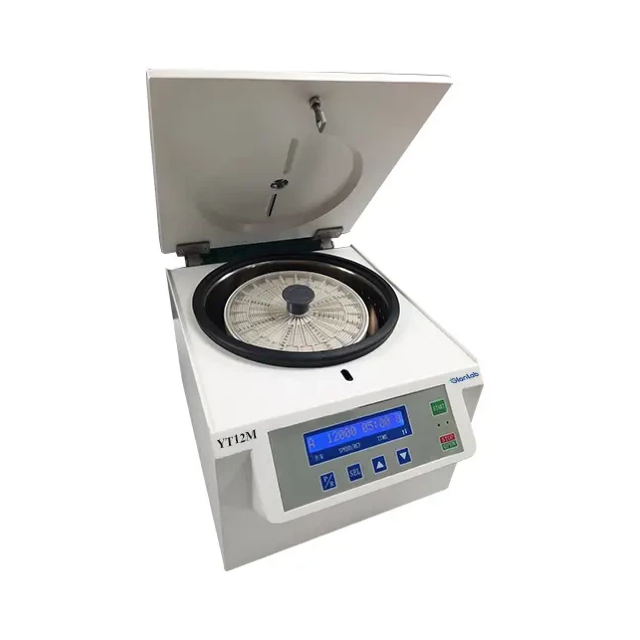
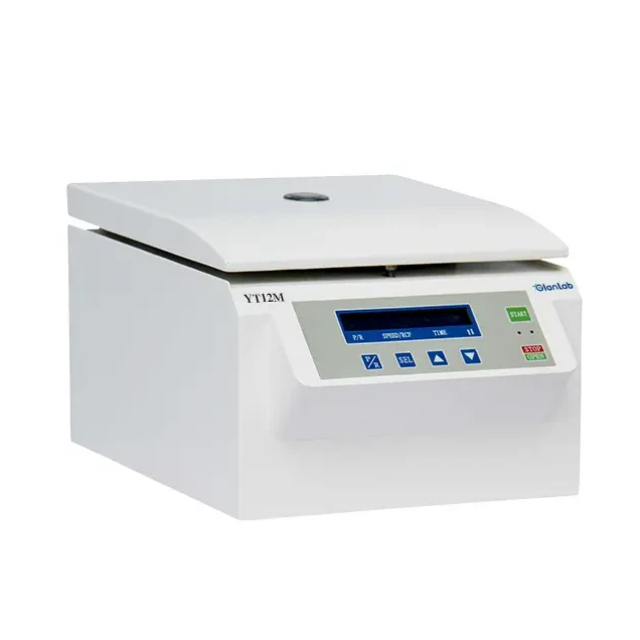
A hematocrit centrifuge is a crucial device for laboratories and medical professionals looking to accurately measure the hematocrit levels of blood samples. This equipment is essential for assessing various medical conditions, such as anemia and dehydration, where the separation of red blood cells, plasma, and other components is key to diagnosis. GlanLab, a leading manufacturer of hematocrit centrifuges, provides high-quality models such as the YT12M that offer accurate results in clinical and emergency settings. In this article, we will explore the settings, use cases, and buying tips for hematocrit centrifuges, including a step-by-step breakdown of the microhematocrit process, equipment requirements, and calibration best practices.
What is a Hematocrit Centrifuge
A hematocrit centrifuge is specifically designed for measuring the volume percentage of red blood cells in blood, a process that requires high-speed, precise centrifugal force and short cycles. Unlike routine clinical centrifuges, which are used for a broader range of applications, a microhematocrit centrifuge is equipped with a specialized rotor capable of handling capillary tubes at high g-forces.
In emergency care or resource-limited settings, where time and accuracy are of the essence, microhematocrit centrifuges offer invaluable assistance by providing rapid screening results for conditions like anemia or dehydration. This device is not just for routine blood separation; it’s essential for confirmatory testing, where quick and precise readings are necessary.
Microhematocrit Workflow—Step-by-Step
The microhematocrit workflow is simple but requires attention to detail to ensure accurate results. Here’s a breakdown of what happens at each stage:
1.Sample and Tube Preparation
To begin, it’s important to fill the capillary tube to the correct level, typically 80-90% full. The blood sample must be mixed well to avoid the formation of bubbles, as these can interfere with the results. Sealing the tube correctly is also crucial—seals should be tight to prevent any leakage during centrifugation.
2.Loading the Rotor Correctly
Proper loading of the rotor is key to ensuring accurate readings. The sealed end of the capillary tube should face outward, and the tubes must be symmetrically placed to ensure balance. Securing the lid correctly is vital to prevent spills and guarantee safety during high-speed centrifugation.
3.Reading the Result
After centrifugation, the next step is to read the results accurately. The packed red blood cells (RBCs) will form a distinct column at the bottom of the tube, and the plasma meniscus should be aligned with the reader. It's essential to exclude the buffy coat (the layer between the plasma and RBCs) from the reading.
Settings that Work—RPM, Time, and Why "RCF Achieved Fast" Matters
Setting the right RPM and time is essential to achieving reliable microhematocrit results. The general recommendation for hematocrit centrifuges is to spin at 11,000 to 12,000 RPM for approximately 4 to 5 minutes. However, it’s important to adhere to specific standard operating procedures (SOPs) to ensure consistency across different runs.
Why Fast Ramp-to-RCF Affects Packing and Repeatability
The hematocrit centrifuge operates by applying rapid centrifugal force (RCF), which separates the blood components based on their density. A fast ramp-up to the desired RCF allows the packed RBCs to settle evenly, reducing variability and ensuring repeatability. Inaccurate or slow ramp-up times can lead to inconsistent packing of RBCs, affecting the accuracy of hematocrit readings.
Practical Tips: Consistent Fill Volume, Time, and Brake Behavior
For optimal performance, it is crucial to maintain consistent sample fill volumes, spin times, and braking behavior. Variations in these parameters can result in inconsistent separation or improper packing of RBCs.
Capillary Tube Types—What to Use, When, and Why It Changes Outcomes
Different types of capillary tubes can significantly affect the accuracy of microhematocrit results. Here are the key considerations:
| Tube Type | When to Use | Impact on Results |
| Heparinized Tubes | Used for capillary blood collection | Prevents clotting, ensuring accurate plasma separation |
| Plain Tubes | Used for venous blood samples | Ideal for separating plasma without interference from clots |
| Glass Tubes | General use in laboratory settings | Offers better sealing but is more prone to breakage |
| Plastic Tubes | Field or mobile settings | Less fragile, but may not offer the same sealing integrity |
Equipment Requirements That Reduce Repeats and Reruns
Investing in the right equipment is critical for minimizing repeat tests and improving overall lab efficiency. Here are the essential features to look for in a hematocrit centrifuge:
Must-Haves:
Capillary rotor capacity: Ensure that the rotor can handle the required number of tubes per run.
Secure lid lock: Prevents accidents by ensuring the lid remains locked during operation.
Imbalance/overspeed protection: Reduces the risk of equipment failure by maintaining balance during high-speed operations.
Readable controls: Makes it easier for operators to adjust settings and monitor performance.
Nice-to-Haves:
Integrated reader in lid: Simplifies result reading by integrating a reader directly into the lid of the centrifuge.
Speed/time display: Displays important information like RPM and time for accurate monitoring.
Lower noise levels: Essential for bench-top use in busy lab environments.
Anchor to GlanLab YT12M capabilities: The YT12M model from GlanLab offers a 12,000 RPM speed, 24-capillary capacity, integrated reader, safety protections, and RPM/RCF conversion, making it a versatile and reliable choice for hematocrit testing.
Calibration and Quality Control
Regular calibration and quality control (QC) are vital for ensuring that your hematocrit centrifuge performs accurately over time. Here are some practices to implement:
What to Verify Regularly
Speed accuracy: Ensure the centrifuge achieves the specified RPM.
Timer accuracy: Verify that the timing mechanism operates as expected.
Rotor condition: Regularly check for wear and tear, particularly on the rotor cushions and gaskets.
Lid lock performance: Ensure that the lid locks securely and functions properly during use.
Operator QC Habits
Operators should follow lab policy by running controls at regular intervals, performing duplicate readings when necessary, and documenting any variance in the results.
Use Cases—Where a Dedicated Hematocrit Centrifuge is the Right Solution
A dedicated hematocrit centrifuge is ideal for specific use cases where rapid and reliable results are necessary:
Rapid anemia/dehydration screening: Quickly assess hematocrit levels to support early diagnosis.
Pediatrics/neonatal contexts: Small sample volumes make microhematocrit ideal for testing young children or infants.
Field clinics and outreach testing: The compact design and speed of microhematocrit centrifuges make them ideal for mobile health clinics.
Education/training labs: Demonstrate separation layers with consistent, repeatable results for educational purposes.
Buying Tips That Are Actually Relevant to Hematocrit Work
When purchasing a hematocrit centrifuge, consider the following factors to ensure that the equipment meets your needs:
| Factor | Why It Matters |
| Capacity | Determine how many capillaries need to be processed per run. |
| Target RPM/RCF | Ensure the centrifuge can maintain the required RPM for accurate readings. |
| Safety Features | Look for overspeed protection, imbalance detection, and secure lid lock. |
| Noise/Footprint | Choose a centrifuge with low noise and compact design for ease of integration. |
| Voltage Options and Documentation | Ensure compatibility with your lab's power system and request CE/ISO certifications. |
Conclusion
A hematocrit centrifuge is an essential tool for any laboratory that regularly measures hematocrit levels. With the right equipment, settings, and quality control procedures, you can achieve reliable and consistent results day in and day out. At GlanLab, we are committed to providing high-performance hematocrit centrifuge machines that are built to meet the demands of any laboratory environment.
For more information or to discuss your specific needs, contact us today!
FAQ
What is the ideal RPM for a hematocrit centrifuge?
Typically, 11,000–12,000 RPM is recommended for optimal hematocrit separation.
Can I use any capillary tube with a hematocrit centrifuge?
No, it’s important to use the correct capillary tube type based on your sample and rotor specifications.
How often should I calibrate my hematocrit centrifuge?
Calibration should be done regularly, ideally on a monthly basis, to ensure accurate readings.
What are the common mistakes when using a hematocrit centrifuge?
Common mistakes include incorrect tube loading, improper sealing, and not adhering to recommended time and speed settings.


