A refrigerated centrifuge is an essential tool for laboratories that work with temperature-sensitive samples. Unlike standard centrifuges, which operate at ambient temperatures, a refrigerated centrifuge maintains a low temperature during centrifugation, ensuring that samples, such as proteins, enzymes, and biological cells, are not damaged due to heat exposure. This temperature control is critical in preserving the integrity of these sensitive samples, which may degrade or lose their function when exposed to higher temperatures. In labs focused on research, clinical diagnostics, or biotech, a refrigerated centrifuge is indispensable for processes that demand precise temperature control.
Why Some Samples Need Cooling During Centrifugation
Centrifugation involves spinning samples at high speeds, which generates heat due to friction. This heat can cause damage to biological materials, such as proteins or cells, which are often sensitive to temperature changes. Without cooling, these heat-sensitive samples may undergo irreversible changes that can compromise experimental results.
Heat Generation in Non-cooled Models
Standard, non-refrigerated centrifuges generate significant heat during operation. This is especially problematic for delicate biological samples, which can be destabilized by elevated temperatures. For instance, enzymes used in research may lose their activity, or DNA/RNA could degrade if the centrifuge does not maintain a constant, cooler environment. A refrigerated centrifuge mitigates this issue by providing continuous cooling, ensuring that the separation process occurs at optimal conditions for sensitive samples.
Impact of Temperature on Sensitive Biological Samples
Many biological samples require cooling to prevent degradation. For example, blood samples for plasma separation must be kept at a controlled temperature to ensure that the plasma remains intact for testing. Similarly, proteins used in biochemical experiments need to be maintained at low temperatures to preserve their functionality. The ability to cool the samples throughout the centrifugation process ensures that they remain stable and intact, resulting in more accurate and reliable outcomes.
Refrigerated Centrifuge vs Ambient Centrifuge
While both refrigerated and ambient centrifuges serve the same fundamental purpose—separating particles in a sample—the key difference lies in the ability to control the temperature.
Key Differences in Design and Performance
The design of a refrigerated centrifuge includes a built-in cooling system that maintains a consistent low temperature, typically between 4°C and -20°C, during centrifugation. This cooling mechanism is crucial for laboratories that handle temperature-sensitive samples.
On the other hand, ambient centrifuges operate at room temperature, which can be sufficient for non-sensitive materials that do not require strict temperature control. However, for critical applications such as clinical diagnostics or protein research, where sample integrity is paramount, a refrigerated centrifuge is the better option.
Cost and Space Implications
While a refrigerated centrifuge typically costs more than an ambient model due to the added cooling system, the investment is often necessary for labs dealing with delicate biological samples. Additionally, refrigerated centrifuges tend to have slightly larger footprints due to the refrigeration unit. However, many modern models are designed to be compact and suitable for benchtop use, making them more accessible even for smaller labs.
Temperature Control Precision and Performance Metrics
A refrigerated centrifuge not only provides cooling but also maintains precise temperature control, ensuring that the samples are kept within the optimal range throughout the centrifugation process.
Temperature Range and Stability
The temperature range in refrigerated centrifuges is critical for ensuring the accuracy of results. A typical refrigerated centrifuge can maintain a stable temperature range between 4°C to -20°C. This consistency in temperature is essential for preventing any fluctuations that could potentially alter the results of experiments or clinical tests. For highly sensitive applications, more advanced units offer even more precise temperature settings, down to the specific fraction of a degree.
Why Precision Matters for Protein, Enzyme, Live Cell Work
In research applications that involve proteins, enzymes, or live cells, maintaining a precise temperature is crucial to ensure that the samples do not undergo thermal degradation. Many enzymes, for example, have specific temperature ranges where they remain active. Similarly, cells can undergo apoptosis or other changes if exposed to excessive heat during centrifugation. The precision offered by refrigerated centrifuges ensures that these materials are not harmed, preserving their integrity for analysis or further use.
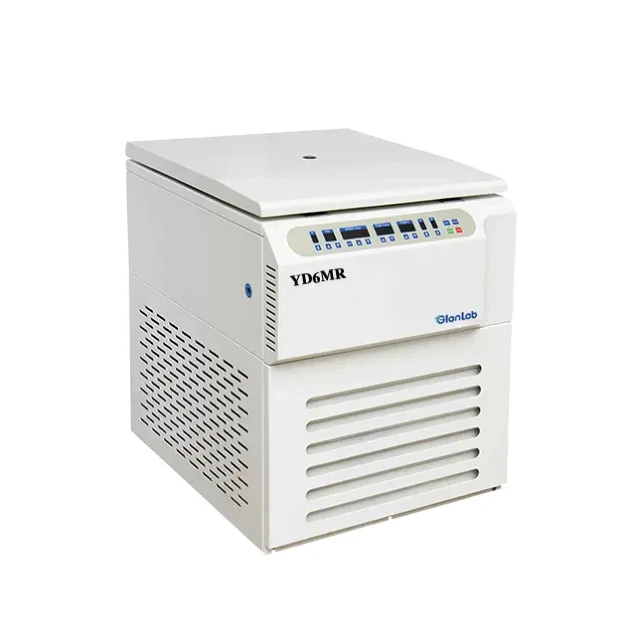
Application Scenarios: Research, Clinical, Biotech
Refrigerated centrifuges play a vital role in a range of fields, from clinical diagnostics to academic research and biotech applications. Understanding the specific scenarios where cooling is essential can help labs determine whether they need a refrigerated unit.
Use Cases Where Cooling Is Essential
In molecular biology, proteomics, and other advanced biological research fields, cooling is critical for preserving the integrity of biological molecules like DNA, RNA, and proteins. For example, during the preparation of protein samples for mass spectrometry, a refrigerated centrifuge ensures that the proteins do not degrade or lose functionality due to heat. Similarly, when isolating RNA from biological samples, cooling is necessary to prevent RNA degradation from temperature-sensitive enzymes.
Examples of Workflows That Demand Refrigerated Models
Several workflows demand the use of a refrigerated centrifuge, particularly in the separation of biological materials. These include:
Blood separation for plasma and serum isolation in clinical labs.
RNA and DNA isolation, which requires temperature control to maintain nucleic acid integrity.
Cell pellet harvesting, where cooling prevents cellular breakdown during the centrifugation process.
Features to Evaluate in Refrigerated Centrifuges
When selecting a refrigerated centrifuge, there are several key features to evaluate to ensure that it meets your lab’s needs.
Built-in Refrigeration Systems
The refrigerated centrifuge should have a reliable and efficient cooling system that can maintain consistent temperatures without significant fluctuations. Some models offer advanced features such as intelligent temperature management systems, which allow users to set specific temperature thresholds and receive alerts if the temperature deviates from the desired range.
Noise, Energy Efficiency, Safety Controls
Noise levels, energy efficiency, and safety features should also be considered when selecting a refrigerated centrifuge. Some units come with soundproofing to reduce operational noise, which is particularly useful in shared lab environments. Energy efficiency is another important factor, as some models feature energy-saving modes that help reduce power consumption during idle periods. Additionally, safety controls like lid locks and imbalance detection systems ensure safe operation, preventing accidents during high-speed runs.
Selecting the Right Refrigerated Centrifuge for Your Lab
When selecting a refrigerated centrifuge, consider the following factors to ensure you choose the right model for your lab’s needs.
Capacity and Throughput Considerations
Choose a refrigerated centrifuge that can handle the volume of samples your lab processes. If you handle small volumes, a compact benchtop model may be sufficient. For larger volumes or higher throughput, a larger unit with higher capacity will be required to meet the demands of your laboratory.
Budget and Return on Investment Discussion
The initial cost of a refrigerated centrifuge is higher than that of a non-refrigerated model, but the long-term benefits, such as improved sample preservation and more accurate results, can make it a valuable investment. Factor in the potential return on investment by considering the impact of maintaining sample integrity on the quality of your research or diagnostics.
Conclusion
In summary, a refrigerated centrifuge is an indispensable tool for labs that require precise temperature control during centrifugation. Whether you're working in a clinical, research, or biotech lab, maintaining the right temperature during sample separation is crucial to ensuring the accuracy and integrity of your results. At GlanLab, we offer high-quality refrigerated centrifuges that provide exceptional performance, reliability, and precision. Contact us to learn more about our product line and how we can assist you in selecting the right centrifuge for your laboratory needs.
FAQ
1. What is the difference between a refrigerated centrifuge and a regular centrifuge?
A refrigerated centrifuge includes a built-in cooling system to maintain a low temperature during centrifugation, which is essential for preserving temperature-sensitive samples. A regular centrifuge operates at ambient temperature, which can damage sensitive biological materials.
2. Why is cooling important for biological samples during centrifugation?
Cooling prevents degradation of sensitive biological materials like proteins, enzymes, and cells, which can lose functionality or become damaged when exposed to heat.
3. How do I choose the right refrigerated centrifuge for my lab?
Consider factors like sample volume, required RCF, space availability, and budget. A refrigerated centrifuge with the appropriate capacity and cooling precision will best suit your lab's needs.
4. What are the typical applications of a refrigerated centrifuge?
Refrigerated centrifuges are commonly used in clinical diagnostics, molecular biology, and proteomics, where precise temperature control is necessary to preserve the integrity of biological samples during separation.


