When samples need to be separated quickly and reliably, a centrifuge is often the first piece of equipment that comes to mind in any laboratory. Whether it is isolating blood components, collecting cell pellets, or preparing DNA samples, this device turns time-consuming processes into controlled, repeatable steps. At GlanLab, we work with laboratories around the world that rely on centrifuges every day, and the real question is not simply what the machine is, but what it can actually do for your specific workflow.
What a Centrifuge Actually Does
The basic idea behind density-based separation
A centrifuge works by applying rotational force to a sample, causing its components to separate based on density. Heavier particles move outward faster, while lighter components remain closer to the center. This principle allows users to clearly divide mixtures that would otherwise take a long time to settle naturally.
Why spinning is faster than waiting for gravity
In natural conditions, separation depends on gravity, which is relatively weak. A centrifuge increases this force many times over, dramatically reducing waiting time. What might take hours under gravity can be completed in minutes with controlled spinning.
What happens to solids, liquids, and mixed samples during a run
During operation, solid particles typically form a compact pellet at the bottom of the tube, while the liquid above becomes a clear supernatant. In more complex mixtures, multiple layers may form, each representing different densities. This predictable behavior is what makes centrifugation essential in both routine and advanced lab work.
Where a Centrifuge Is Commonly Used
Clinical and hospital laboratories
In clinical environments, centrifuges are used daily for blood testing and diagnostics. Separating plasma or serum from whole blood is a standard procedure that supports accurate test results and timely medical decisions.
Research and university labs
Research laboratories rely on centrifuges for a wide range of tasks, from molecular biology to cell culture work. Scientists use them to isolate cells, purify nucleic acids, and prepare samples for analysis.
Food, agriculture, and chemical sample preparation
Beyond healthcare and research, centrifuges are widely used in industries such as food testing, agriculture, and chemical processing. They help separate liquids, detect contaminants, and ensure product quality.
Routine sample prep vs specialized separation tasks
Some labs use centrifuges for simple, repetitive tasks, while others require specialized applications such as PRP preparation or high-speed molecular separation. The versatility of centrifuges allows them to adapt to both ends of this spectrum.
Which Everyday Lab Jobs Usually Need a Centrifuge
Blood component separation
One of the most common uses is separating whole blood into plasma, serum, or red blood cells. This is essential for diagnostic testing and medical analysis.
Cell pelleting and supernatant collection
In biological research, centrifuges are used to collect cells from liquid media. After spinning, the cells form a pellet, making it easy to remove the surrounding liquid.
DNA, RNA, and protein workflows
Modern molecular workflows depend heavily on centrifugation. From sample preparation to purification steps, consistent separation is critical for reliable experimental results.
PRP and other application-specific uses
In specialized applications such as platelet-rich plasma preparation, centrifuges play a key role in achieving precise separation. Different protocols may require specific speeds and rotor types to obtain optimal results.
What Changes the Result in Real Use
Speed, time, and centrifugal force
The effectiveness of a centrifuge depends on how fast it spins and how long the sample is processed. These factors determine the centrifugal force applied and directly influence separation quality.
Rotor style and tube format
Different rotors are designed for different sample types and volumes. Choosing the correct rotor ensures that the force is applied evenly and efficiently.
Why temperature control matters for some samples
Some samples, especially biological materials, are sensitive to heat. Refrigerated centrifuges help maintain stable temperatures, preserving sample integrity during high-speed operation.
Why balancing and proper loading affect consistency
Proper balancing of tubes is essential for safe and accurate operation. Uneven loading can lead to vibration, reduced performance, and even equipment damage.
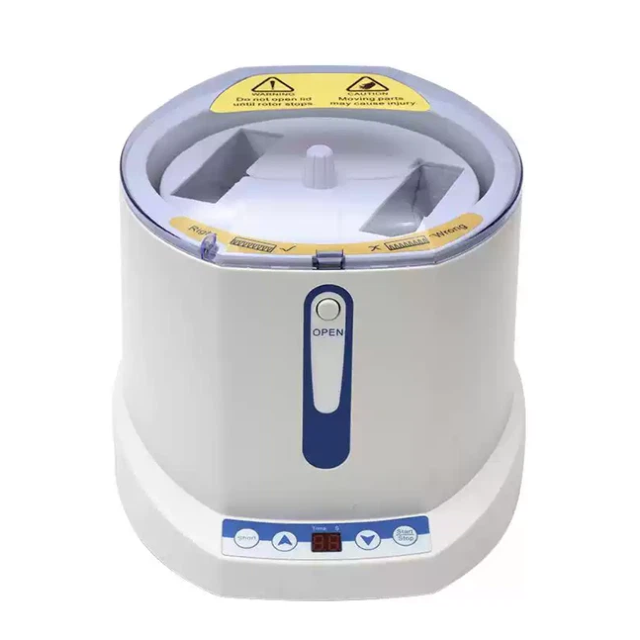
Common Lab Tasks and the Centrifuge Features They Usually Need
Lab task | Typical sample | What matters most | Suggested centrifuge direction |
Blood separation | Whole blood | Stable speed, consistent performance | Clinical or low-speed centrifuge |
DNA/RNA prep | Microtubes | High speed, precision control | Micro or high-speed centrifuge |
Protein work | Temperature-sensitive samples | Refrigeration, stability | Refrigerated centrifuge |
Plate workflows | Multi-sample testing | Throughput, plate compatibility | Plate centrifuge |
This table highlights an important point: different tasks require different configurations. A single centrifuge type may not meet every need, especially in laboratories with diverse workflows.
When a Basic Centrifuge Is Enough and When You Need More
Small-volume routine work
For basic sample separation, a standard benchtop centrifuge is often sufficient. These models are compact, easy to operate, and cost-effective.
High-throughput sample handling
Labs processing large numbers of samples benefit from higher-capacity or floor-standing centrifuges. These machines improve efficiency by handling more samples in each run.
Sensitive samples that require refrigeration
If your work involves proteins, blood components, or other temperature-sensitive materials, a refrigerated centrifuge becomes essential. It ensures that sample quality is maintained throughout the process.
Why rotor compatibility matters more than many buyers expect
Rotor selection is often overlooked, but it plays a crucial role in performance. Having access to multiple rotor options allows a centrifuge to support different tube sizes and applications, making it more versatile in the long term.
How This Helps You Narrow Down the Right Equipment
Start with the sample, not the machine brochure
Instead of focusing on specifications alone, begin by understanding the type of samples you work with and the outcomes you need.
Match daily workflow before comparing specifications
A centrifuge should fit seamlessly into your routine. Consider how often you use it, how many samples you process, and what level of precision is required.
Why broad product lines are useful for growing labs
Laboratories often evolve over time. Choosing a supplier with a wide range of centrifuge options makes it easier to upgrade or expand as your needs change. GlanLab offers multiple types of centrifuges, from micro models to large-capacity units, allowing users to find a solution that matches both current and future requirements.
Conclusion
A centrifuge is not just a machine that spins; it is a tool that directly impacts the efficiency, accuracy, and consistency of your lab work. The real value lies in choosing a system that aligns with your daily tasks and long-term goals. As a professional manufacturer, GlanLab provides a wide range of centrifuge solutions designed for clinical, research, and industrial environments, helping users achieve reliable results across applications. If you are looking to improve your workflow and find a suitable solution, feel free to contact us to learn more about how the right separation equipment can support your work.
FAQ
What does a centrifuge do in a laboratory?
A centrifuge separates components in a sample based on density, allowing faster and more accurate analysis in various laboratory tasks.
How do I know which centrifuge is suitable for my work?
You should consider sample type, volume, required speed, and whether temperature control is needed. Matching these factors to your workflow is key.
Why is refrigeration important in some centrifuges?
Refrigeration helps protect temperature-sensitive samples, such as proteins or blood components, from degradation during high-speed operation.
Can one centrifuge handle different types of applications?
Yes, if it supports multiple rotor types and configurations. Versatility depends on design and compatibility with different sample formats.


