A centrifuge machine is one of the most commonly used pieces of equipment in laboratories, yet choosing the right one is rarely straightforward. Many users understand what the device does, but struggle to decide which configuration actually suits their daily work. Should you focus on speed, force, capacity, or temperature control? Is a compact unit enough, or do you need a larger system for long-term use? At GlanLab, we often find that the best decisions come not from comparing specifications alone, but from understanding how the machine fits into real workflows. This article is designed to help you move from general knowledge to practical selection, so your centrifuge machine truly supports your work rather than complicates it.
Start with the Work, Not the Catalog
What samples do you process every day
The starting point for any centrifuge machine selection is the sample itself. Laboratories handle a wide range of materials, including blood, cell suspensions, chemical solutions, and biological extracts. Each type behaves differently during centrifugation. For example, blood requires stable and gentle separation, while molecular samples may require higher force and precision. Understanding your primary sample type helps narrow down the machine category immediately.
How many tubes do you run per batch
Batch size is closely linked to productivity. A lab that processes only a few samples at a time does not need the same capacity as one handling dozens of tubes per run. Choosing a centrifuge machine with the right capacity reduces unnecessary repetition and improves workflow efficiency. At the same time, selecting a model that is too large can waste space and increase costs without real benefits.
How often does the machine need to operate
Frequency of use is another key factor. In high-throughput laboratories, centrifuges may run continuously throughout the day. These environments require machines with durable components and stable performance. In contrast, occasional use does not demand the same level of endurance, allowing for simpler configurations.
Whether your work is routine, clinical, or research-heavy
The nature of your work also influences the type of centrifuge machine required. Routine applications focus on consistency and ease of use, while research environments often require flexibility and higher performance. Clinical laboratories may need specialized designs to meet testing standards and ensure reliable results.
The Specifications That Matter Most
RPM and RCF
RPM measures how fast the rotor spins, but RCF reflects the actual force applied to the sample. While RPM is easier to understand, RCF provides a more accurate indication of performance. A well-matched centrifuge machine balances both factors to achieve the desired separation effect.
Tube capacity and batch size
Capacity is not just about how many tubes fit into the machine; it also determines how efficiently you can process samples. A properly sized centrifuge machine reduces waiting time and improves workflow continuity.
Rotor type and compatibility
Rotor selection plays a critical role in performance. Different rotors are designed for different tube sizes and applications. A machine that supports multiple rotor options can adapt to various tasks, making it more versatile over time.
Refrigeration capability
Temperature control becomes essential when working with sensitive materials such as proteins or biological samples. A refrigerated centrifuge machine helps maintain stability during operation, especially in high-speed or long-duration runs.
Benchtop vs floor-standing footprint
Laboratory space is often limited, making size an important consideration. Benchtop models are compact and easy to integrate into smaller workspaces, while floor-standing units provide higher capacity for larger operations.
When a Refrigerated Centrifuge Machine Is the Better Choice
Blood, proteins, and temperature-sensitive materials
Certain samples are highly sensitive to temperature changes. Without proper cooling, heat generated during centrifugation can affect sample quality. Refrigerated centrifuge machines help maintain consistent conditions, ensuring reliable results.
Sample stability during longer or higher-force runs
High-speed or extended runs can lead to temperature increases inside the chamber. Cooling systems prevent this from affecting the sample, especially in applications requiring precise conditions.
When refrigeration is unnecessary
Not all applications require temperature control. For routine tasks involving stable samples, a standard centrifuge machine without refrigeration can be more cost-effective and easier to maintain.
How to Match a Centrifuge Machine to Daily Workflow
Work requirement | What to check first | Why it matters | Likely machine direction |
Small routine sample runs | Capacity and footprint | Avoid overbuying and save space | Benchtop centrifuge |
High-force separation | RCF and rotor | Determines separation efficiency | High-speed centrifuge |
Sensitive biological samples | Refrigeration | Protects sample quality | Refrigerated centrifuge |
Large batch processing | Capacity and design | Improves productivity | Floor-standing centrifuge |
Mixed applications | Rotor flexibility | Expands usability | Multi-purpose centrifuge |
This table highlights a key principle: the best centrifuge machine is not the most advanced one, but the one that aligns with your actual workflow.
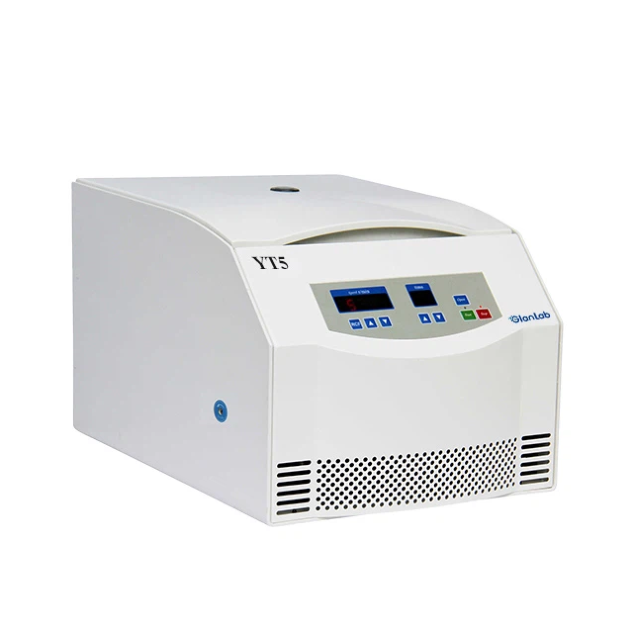
Common Buying Mistakes That Slow Labs Down
Focusing on RPM only
Many users assume higher RPM automatically leads to better results. However, without considering RCF and rotor design, high speed alone may not deliver effective separation.
Ignoring rotor and tube format
A centrifuge machine must match the tubes used in your lab. If the rotor does not support your sample format, the machine’s functionality becomes limited.
Choosing too little or too much capacity
Insufficient capacity leads to repeated runs, increasing workload and reducing efficiency. On the other hand, excessive capacity may not be fully utilized, resulting in wasted resources.
Forgetting future workflow changes
Laboratories evolve over time. Selecting a centrifuge machine that allows for flexibility and expansion helps avoid the need for frequent replacements.
What Makes a Centrifuge Machine More Practical in Long-Term Use
Easy operation and repeatable settings
User-friendly interfaces and programmable settings simplify daily operation. They also ensure that results remain consistent across multiple runs.
Reliable safety and stable performance
Safety features such as secure locking systems and stable operation are essential, especially for high-speed applications. A dependable centrifuge machine reduces risks and ensures long-term reliability.
Availability of matching rotors and accessories
A wide range of compatible accessories increases the versatility of the machine. It allows users to handle different sample types without needing multiple devices.
Product range that supports future upgrades
Choosing equipment from a supplier with a broad product portfolio makes it easier to expand or upgrade as your needs grow. GlanLab offers a full range of centrifuge machines, including high-speed, low-speed, refrigerated, benchtop, and specialized models, ensuring that users can find suitable solutions for different applications.
Why This Selection Process Matters for Distributors and End Users
Better match means fewer complaints
When a centrifuge machine fits the application, it reduces operational issues and improves user satisfaction. This is particularly important for distributors and project-based buyers.
Better workflow fit improves user satisfaction
Equipment that integrates smoothly into daily processes enhances productivity and reduces frustration. Users can focus on their work instead of adjusting to unsuitable equipment.
Easier project communication when requirements are clear
Clear understanding of requirements simplifies communication between buyers and suppliers. It also ensures that the selected equipment meets expectations from the beginning.
Conclusion
The right centrifuge machine is not defined by a single specification, but by how well it matches your samples, workflow, and expected results. By focusing on real operational needs, users can make more informed decisions and achieve better outcomes. As a professional manufacturer, GlanLab provides a comprehensive range of centrifuge solutions designed to support laboratories across different industries. If you are looking to improve efficiency and select equipment that truly fits your work, feel free to contact us and explore how the right centrifugal equipment can support your operations.
FAQ
What should I consider first when choosing a centrifuge machine?
Start with your sample type and workflow requirements, as these determine the most suitable configuration.
Is a high-speed centrifuge machine always better?
Not necessarily. High speed is only beneficial if your application requires it. Otherwise, it may add unnecessary complexity.
Do I need a refrigerated centrifuge machine for all applications?
No, refrigeration is mainly needed for temperature-sensitive samples. Routine applications may not require it.
Can one centrifuge machine support different workflows?
Yes, if it offers rotor flexibility and compatible accessories, it can handle multiple types of applications.


