Every laboratory has its own rhythm, but one thing remains consistent: a centrifuge is almost always part of the daily workflow. From routine blood testing to advanced molecular research, many essential procedures depend on fast and reliable separation. At GlanLab, we have seen how laboratories across different industries rely on centrifugation not as an optional tool, but as a core process that directly affects efficiency, accuracy, and consistency. Understanding why this equipment is so widely used helps users better recognize its value in real applications.
Why Centrifugation Is a Core Lab Process
Faster separation means faster decisions
In many laboratory environments, time is not just about efficiency; it is about outcomes. Waiting for natural separation can slow down analysis and delay results. A centrifuge accelerates this process, allowing technicians to move quickly from sample preparation to testing. Faster separation often means faster decisions, whether in clinical diagnostics or research development.
Better sample preparation supports better downstream results
Many analytical techniques depend on clean and well-prepared samples. If separation is incomplete or inconsistent, it can affect the reliability of downstream processes such as PCR, protein analysis, or chemical testing. Centrifugation ensures that unwanted particles are removed and target components are properly isolated.
Why consistent separation matters in repeat workflows
Laboratories often perform the same procedures repeatedly. Consistency becomes critical when results must be comparable across batches. A centrifuge provides controlled and repeatable conditions, ensuring that each run produces similar outcomes. This level of consistency is difficult to achieve with manual or passive separation methods.
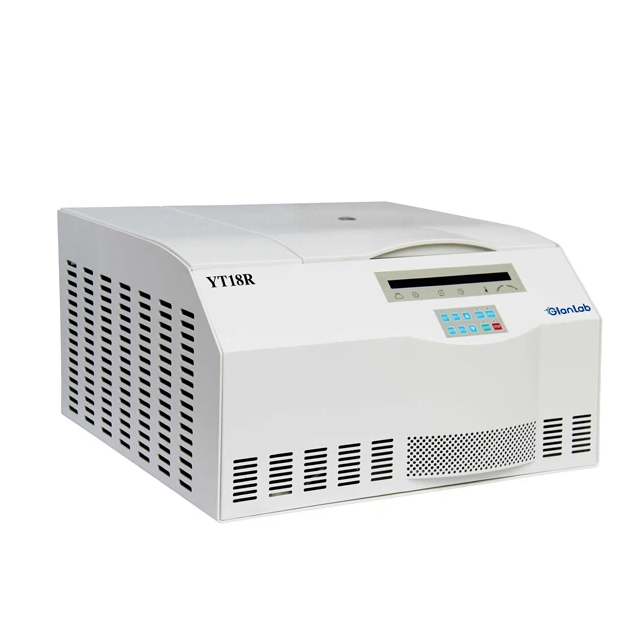
The Main Types of Centrifuge Seen in Laboratories
Low-speed centrifuge
Low-speed centrifuges are commonly used for routine applications such as blood separation. They are reliable, easy to operate, and suitable for everyday clinical tasks.
High-speed centrifuge
High-speed centrifuges generate greater centrifugal force, making them ideal for separating smaller particles or working with molecular samples. These models are often found in research laboratories.
Refrigerated centrifuge
When working with temperature-sensitive samples, refrigerated centrifuges help maintain stable conditions during operation. This is especially important for biological materials that can degrade under heat.
Benchtop and floor-standing models
Benchtop centrifuges are compact and suitable for smaller labs or limited spaces. Floor-standing models, on the other hand, offer higher capacity and are designed for larger workloads.
Micro, blood, and plate centrifuge options
Specialized centrifuges are designed for specific applications. Microcentrifuges handle small-volume samples, blood centrifuges are optimized for clinical use, and plate centrifuges support high-throughput screening.
What Makes One Type Better for One Job Than Another
Sample volume
The amount of sample processed in each run determines the required capacity. Smaller volumes can be handled by compact units, while larger batches require higher-capacity machines.
Required force
Different separation tasks require different levels of centrifugal force. High-speed applications need stronger force to achieve proper separation, while routine tasks may not.
Temperature sensitivity
Some samples, such as proteins or blood components, are sensitive to temperature changes. In these cases, refrigerated centrifuges are essential to maintain sample quality.
Throughput and frequency of use
Laboratories that process large numbers of samples daily need equipment that can handle continuous operation efficiently. Throughput becomes a key factor in selecting the right type.
Types of Centrifuge and Typical Use Scenarios
Centrifuge type | Best for | Typical advantage | Common lab setting |
Low-speed | Routine blood/sample separation | Simple and practical | Clinic or hospital |
High-speed | Molecular and fine particle work | Strong separation force | Research lab |
Refrigerated | Heat-sensitive materials | Protects sample integrity | Clinical and biotech labs |
Benchtop | Limited space applications | Compact design | Small to medium labs |
Floor-standing | Large batch processing | High capacity | Central labs and blood banks |
This comparison shows that centrifuges are not one-size-fits-all tools. Each type is designed to meet specific operational needs.
Why Labs Rarely Need “Just Any” Centrifuge
A mismatch can reduce efficiency
Using the wrong type of centrifuge can slow down workflows. For example, a machine with insufficient capacity may require multiple runs, increasing time and labor.
Wrong rotor or force can affect results
Even if the centrifuge is functioning properly, using the wrong rotor or insufficient force can lead to incomplete separation. This directly impacts the quality of results.
Overbuying can waste budget and space
Choosing a machine with unnecessary features or excessive capacity can lead to wasted resources. Laboratories benefit more from equipment that matches their actual needs.
Questions Buyers Often Ask Before Moving Forward
Do I need refrigeration?
This depends on the type of samples being processed. Temperature-sensitive materials often require refrigerated models to maintain stability.
Should I compare RPM or RCF first?
While RPM indicates speed, RCF reflects the actual force applied to the sample. Understanding both helps ensure proper selection.
How much tube capacity is enough for daily work?
Capacity should match the number of samples processed per run. Too little capacity increases workload, while too much may not be cost-effective.
Can one centrifuge cover multiple applications?
Some centrifuges support different rotors and configurations, allowing them to handle various tasks. However, specialized applications may still require dedicated models.
Why a Broad Product Portfolio Helps End Users
Easier matching to workflow
A wider range of centrifuge options makes it easier to find equipment that fits specific laboratory tasks. This reduces the need for compromises.
Easier upgrade path as lab needs change
Laboratory requirements often evolve. Having access to different models allows users to expand or upgrade without major disruptions.
Better fit for distributors and project buyers
For distributors and large projects, flexibility in product selection is essential. A comprehensive product line simplifies planning and ensures compatibility across applications.
GlanLab offers a diverse range of centrifuges, including high-speed, low-speed, refrigerated, benchtop, and specialized models. This variety allows users to match equipment precisely to their operational needs while maintaining consistent performance and reliability.
Conclusion
The reason a centrifuge is used in so many labs is not because it is a generic tool, but because it can be adapted to meet highly specific requirements across different applications. From clinical testing to advanced research, centrifugation supports faster workflows and more reliable results. As a professional manufacturer, GlanLab provides a wide selection of centrifuge solutions designed to meet diverse laboratory needs worldwide. If you are exploring how to improve your lab processes or expand your capabilities, feel free to contact us to learn more about our lab separation systems and how they can support your work.
FAQ
Why is a centrifuge important in laboratory work?
A centrifuge speeds up sample separation, making laboratory processes more efficient and improving the accuracy of test results.
What types of centrifuge are commonly used in labs?
Common types include low-speed, high-speed, refrigerated, benchtop, and specialized centrifuges designed for specific applications.
Can one centrifuge be used for different applications?
Yes, some centrifuges can support multiple applications if they are compatible with different rotors and configurations.
How does centrifugation improve workflow efficiency?
By reducing separation time and ensuring consistent results, centrifugation allows laboratories to process samples faster and more reliably.


