Leading Centrifuge Machine Manufacturer Supplier in China  
You are here: Home » Blog » Replace a Laboratory Centrifuge Without Unnecessarily Changing the Workflow

Replace a Laboratory Centrifuge Without Unnecessarily Changing the Workflow

Views: 0     Author: Site Editor     Publish Time: 2026-10-17      Origin: Site

facebook sharing button
twitter sharing button
line sharing button
wechat sharing button
linkedin sharing button
pinterest sharing button
whatsapp sharing button
kakao sharing button
snapchat sharing button
telegram sharing button
sharethis sharing button

Laboratory Equipment Replacement

Replace the centrifuge without unnecessarily changing the workflow.

A laboratory centrifuge is often replaced because the equipment is ageing, faults are becoming more frequent, support is becoming difficult, or the current platform no longer fits the laboratory's requirements.

The replacement does not necessarily need to change the established method. The better starting point is to identify the conditions that the new centrifuge must continue to support: sample vessel, rotor, RCF, capacity, temperature and operating conditions.

Once these are defined, the replacement can be evaluated as a compatibility project rather than simply choosing another machine with a similar name or RPM.

Replacement checkpoints
Sample What is processed?
Vessel What container is used?
Rotor Which configuration?
RCF What force is required?
Capacity How many per run?
Temperature Ambient or refrigerated?
Installation Space and power

Decide What Must Stay, What Must Be Rechecked and What Can Improve

Not every specification of the old centrifuge needs to be reproduced. Separate the requirements into three groups before comparing replacement equipment.

Keep

Method-critical conditions

Sample vessel, required RCF, operating time, temperature and the practical batch capacity needed by the existing workflow.

Re-check

Equipment-dependent conditions

Rotor compatibility, adapter requirements, acceleration and deceleration, chamber dimensions, installation space and electrical requirements.

Upgrade

Genuine new requirements

Additional vessel formats, higher capacity, refrigeration or a wider rotor range when the laboratory has actually outgrown the old platform.

The Rotor Is the First Compatibility Check

The centrifuge body is only one part of the operating system. The rotor determines how the sample vessel is positioned, how many vessels can be processed and, together with rotor radius and speed, the centrifugal force.

Machine Drive and chamber
Rotor Geometry and speed rating
Adapter / Bucket Physical vessel support
Vessel Tube, bottle or plate
Protocol RCF, time and temperature
Do not assume that an existing rotor can be transferred to a replacement centrifuge. Rotor attachment, drive interface, chamber dimensions, rotor identification, maximum speed and maximum RCF all need to be confirmed for the exact combination. If the existing rotor is being considered for reuse, its condition and available service or inspection records should also be reviewed.

Record the old rotor

  • Rotor model or identification number
  • Fixed-angle or swing-out configuration
  • Number and volume of positions
  • Maximum rated speed or RCF
  • Bucket and adapter configuration
  • Current vessel format

Check the rotor condition

  • Visible corrosion or surface damage
  • Cracks, deformation or abnormal wear
  • Condition of buckets and adapters
  • Drive interface and locking components
  • Available inspection or service history
  • Manufacturer's current operating limits

Match RCF, Not Just the Old RPM

RCF relationship
RCF = 1.118 × 10⁻⁵ × r × RPM²
r = rotor radius in centimetres.

RPM tells you how fast the rotor turns. RCF describes the relative centrifugal force applied to the sample. Because rotor radius is part of the relationship, two centrifuges running at the same RPM can produce different RCF values.

For a replacement project, the most useful information is the RCF required by the existing method. If only RPM is recorded, provide the old centrifuge model and rotor information as well.

The selected replacement rotor must be evaluated at its own rated speed and RCF. The maximum specification of the centrifuge itself should not be treated as the operating limit of every available rotor.

Check the Existing Workflow Against the New Configuration

A replacement is successful when the complete working configuration still makes sense, not simply when the new machine has similar headline specifications.

Existing condition What to record Replacement question
Sample vessel Tube, bottle, plate, volume and dimensions Can the new rotor physically support the same vessel?
Rotor Type, model, capacity and speed rating Is there a compatible rotor, or is a new rotor required?
RCF Required ×g from the method Can the selected rotor reach the required force?
Capacity Actual vessels processed per run Will the replacement maintain the required batch size?
Time Spin time and relevant handling time Does the replacement support the operating cycle?
Temperature Required operating temperature Is a refrigerated configuration necessary?
Acceleration / deceleration Whether the method depends on braking behaviour Can the required profile be reproduced or appropriately assessed?
Installation Available space, voltage and frequency Can the new machine be installed without major changes?

Choose the Replacement Platform From the Actual Requirement

The right replacement may be a similar-capacity machine, a more flexible benchtop platform or a larger refrigerated system. The following GlanLab platforms illustrate three different replacement directions.

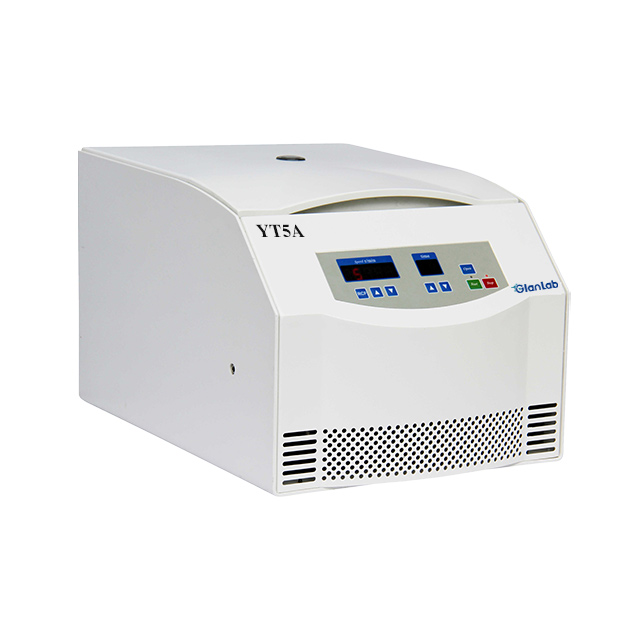
GlanLab YT5A laboratory centrifuge
Routine / Medium Capacity

YT5A / YT5AR

5,000 rpm 4,730 ×g 4 × 300 mL

A practical starting point for replacement projects based around routine, medium-capacity work. The YT5A is non-refrigerated, while YT5AR provides a temperature range of −20°C to 40°C. The platform has multiple rotor configurations for tubes, microplates and larger vessels.

Review YT5A / YT5AR →
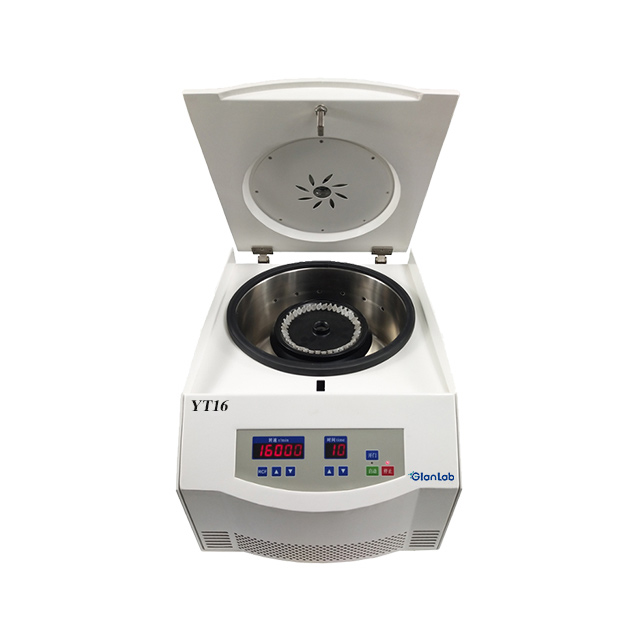
GlanLab YT16 high speed universal centrifuge
Multi-Vessel Benchtop

YT16 / YT16R

16,000 rpm 20,600 ×g 6 × 100 mL

A stronger replacement option when the existing workflow covers several vessel sizes. Published rotor configurations include microtubes, PCR formats and larger tubes up to 100 mL. YT16R adds refrigerated operation from −20°C to 40°C.

Review YT16 / YT16R →
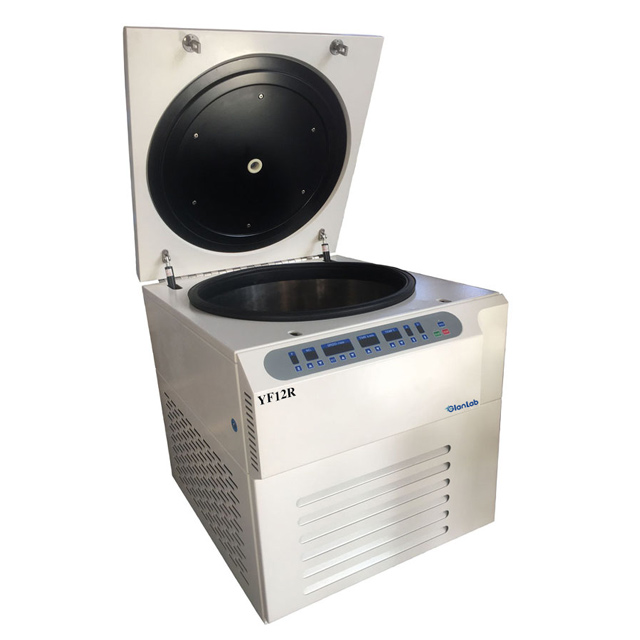
GlanLab YF12R large capacity refrigerated centrifuge
Larger Capacity / Floor

YF12R

12,000 rpm 22,650 ×g 4 × 1000 mL

Relevant when the replacement project also needs larger batch capacity or refrigerated floor-standing operation. Published rotor options include 6 × 300 mL fixed-angle, 4 × 1000 mL swing and microplate configurations.

Review YF12R →
If the current workflow involves several vessel families or higher throughput, GlanLab's high-speed centrifuge, refrigerated centrifuge and large-capacity centrifuge categories provide additional platforms for comparison. The exact rotor, adapter, vessel and operating limits should be confirmed for the selected configuration rather than inferred from the machine category alone.

When Replacement Should Also Become an Upgrade

A direct replacement is not always the best long-term decision. The laboratory may have changed since the original centrifuge was purchased.

  • Sample volume has increased and the old batch size now creates a queue.
  • New vessel formats need to be processed by the same laboratory.
  • Refrigeration is now required for part of the workflow.
  • A wider rotor range would allow several existing workflows to share one platform.
  • The old centrifuge has become difficult to maintain or no longer fits the laboratory's equipment strategy.

In these cases, copying every specification of the old machine can preserve an outdated limitation. The better approach is to preserve the method-critical requirements while deliberately changing the equipment capabilities that no longer fit.

Prepare These Details Before Requesting a Replacement Quote

Existing centrifuge
Model, photos and nameplate information
Existing rotor
Rotor model, type, capacity and available documentation
Sample vessel
Tube, bottle or plate type, dimensions and working volume
Required RCF / RPM
Current operating setting and protocol requirement if available
Capacity
Actual number of vessels processed per run
Run conditions
Time, temperature and any acceleration / deceleration requirements
Installation
Available space, voltage and frequency
Destination
Country or market and any required procurement documentation
Quantity
Single replacement, multiple units or future repeat requirement

Start With the Existing Workflow

For a centrifuge replacement project, the most useful starting information is not simply the old machine's maximum RPM. Provide the existing rotor, vessel, required RCF, capacity, run time, temperature and installation conditions.

GlanLab can then assess the replacement around the actual working configuration and identify whether a direct replacement, a different rotor package or a higher-capacity platform is appropriate.

GlanLab, with over 20 years of experience, manufactures a full range of centrifuge machines, including benchtop, high-speed, floor-standing, and specialized models in China. We offer distribution, wholesale, OEM services, and single-unit orders at competitive prices. With complete quality certifications and robust after-sales support, GlanLab is your trusted partner for centrifuge supplies.
Contact Us
  +86-18362053005
   inquiry@glanlab.com
  No. 151, Building 60, Houhu Art Park Area D, Yuelu Dist, Changsha, Hunan, China
Leave a Message
Contact Us
Copyright© 2025 Changsha Glanlab Tech Co., Ltd.  Support By jingdian    Sitemap    Privacy Policy