Views: 0 Author: Site Editor Publish Time: 2026-10-23 Origin: Site
Rotor Compatibility & Supply Continuity
A replacement part must restore the required operating configuration—not merely match its nominal size.
When a centrifuge is out of service, the difficult part is not always finding a spare component. It may be determining whether an apparently similar part can safely replace the original, and whether the laboratory can continue using its established centrifugation method afterwards.
For laboratories operating equipment over many years, and distributors supplying repeat orders across different markets, spare-parts planning should be addressed before the first equipment order is finalized.
The important distinction is between a part that looks similar and a replacement whose machine compatibility, vessel support and operating limits have actually been confirmed.
The supply-continuity principle: identify the original configuration, establish whether the proposed part is an approved match, then confirm the supply and support route.
Four 50 mL Rotors Can Have Four Different Operating Limits
Nominal vessel capacity is one of the easiest specifications to misinterpret when sourcing a replacement rotor. It describes the container volume, not the complete operating capability.
The GlanLab YT18 / YT18R series provides a useful example. Its published rotor range includes several 50 mL configurations, but their maximum speeds and relative centrifugal forces are substantially different.
Rotor
Published capacity
Max. rotor speed
Max. RCF
G18-27
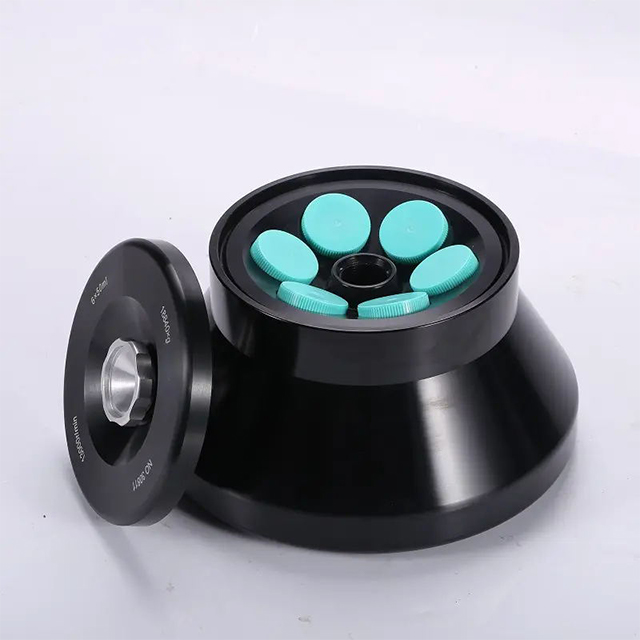
6 × 50 mL, conical
13,000 rpm
18,840 ×g
G18-28
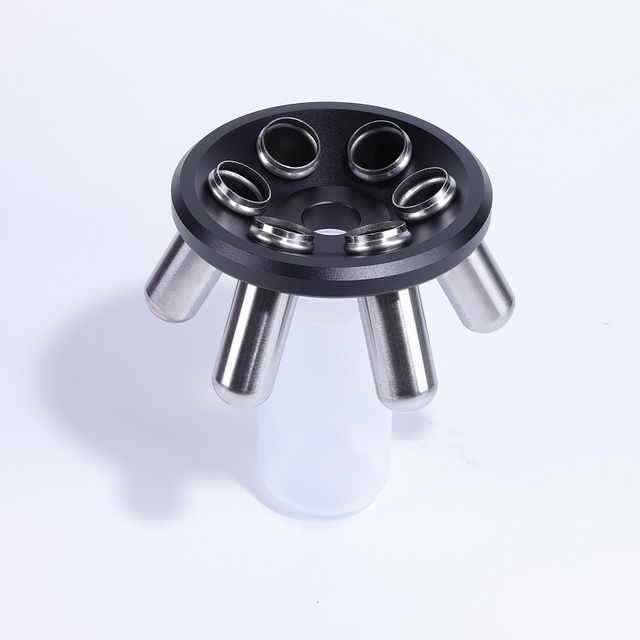
6 × 50 mL, round-bottom
13,000 rpm
18,730 ×g
G18-29
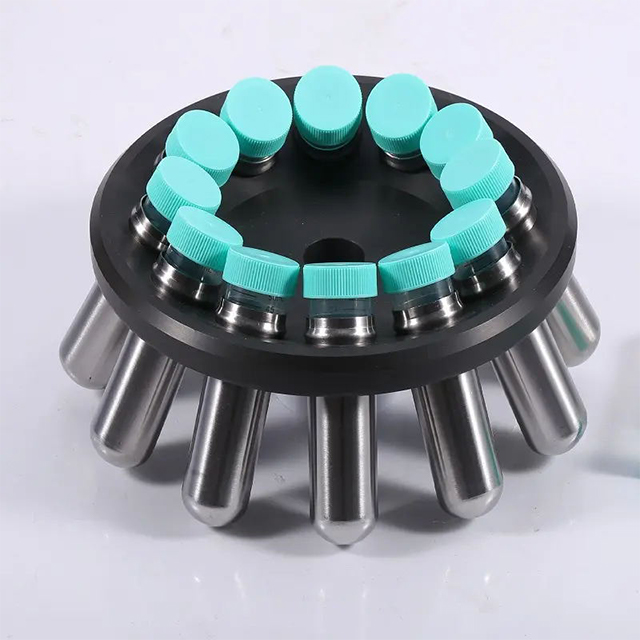
12 × 50 mL
5,000 rpm
3,860 ×g
G18-30
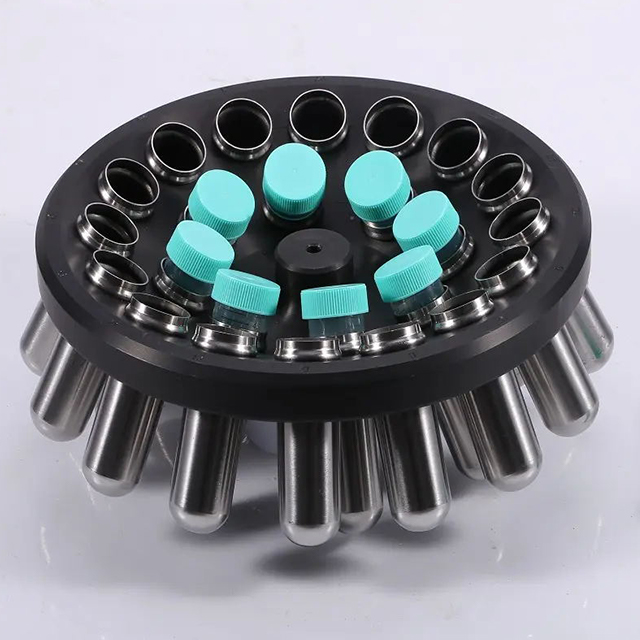
24 × 50 mL
4,000 rpm
2,970 ×g
Published GlanLab YT18 / YT18R rotor data. These are individual rotor limits, not interchangeable operating specifications. The final vessel and accessory combination must be confirmed separately.
G18-276 × 50 mL · Conical vessel configuration
G18-286 × 50 mL · Round-bottom configuration
G18-2912 × 50 mL · Higher batch capacity
G18-3024 × 50 mL · Larger low-speed batch configuration
Consider a laboratory that normally operates G18-27 at a protocol requiring more than 10,000 ×g. Replacing it with G18-29 simply because both accept nominally 50 mL vessels would not preserve that method: G18-29 has a published maximum RCF of 3,860 ×g.
Conversely, a laboratory seeking more 50 mL positions for a lower-force workflow might have a reason to evaluate G18-29 or G18-30. That would be a new operating configuration, however—not an automatically equivalent spare part.
Replacement decision
Vessel fit, host-machine compatibility and the ability to reproduce the required operating conditions are three separate checks. Passing one does not establish the other two.
Rotor Identification Must Be Matched to the Host Machine
Rotor capacity alone also fails to identify the machine family to which a component belongs.
GlanLab's YT16 / YT16R uses a separately identified G16 rotor family. Its G16-20 configuration is published as 6 × 50 mL, with a maximum rotor speed of 11,000 rpm and a maximum RCF of 13,480 ×g.
The YT18 family also includes 6 × 50 mL rotors, but under its G18 identification system and with different published parameters. The existence of similarly described configurations does not establish cross-platform interchangeability.
YT16 / YT16R platform
G16-20
Published as 6 × 50 mL, 11,000 rpm and 13,480 ×g. Replacement selection must be confirmed against its intended G16 host configuration.
YT18 / YT18R platform
G18-27 / G18-28
Both are 6 × 50 mL configurations, but are separately identified for conical and round-bottom vessels and have their own published operating limits.
A replacement order should therefore identify the original machine model and applicable version, rotor identification, necessary bucket or adapter, actual vessel and required running conditions. Photographs can help investigate an unknown part, but should not replace confirmation of its identity and compatibility.
When a Replacement Version Exists, Verify What Has Actually Changed
A component may be updated, replaced by another ordering reference, or supplied as part of a revised assembly. A new part number alone does not establish that the original workflow can be resumed unchanged.
Before accepting a proposed alternative, the replacement relationship needs to be confirmed at the configuration level. The review is particularly important for a high-energy rotating component such as a centrifuge rotor.
01
Machine applicability
Confirm that the proposed part is suitable for the exact host machine and applicable product version. Similar dimensions, attachment appearance or nominal capacity are not sufficient.
02
Accessory configuration
Establish whether the original bucket, adapter, vessel support and other necessary components remain applicable, or whether the replacement requires a different complete assembly.
03
Operating envelope
Compare the permitted rotor speed, RCF, vessel capacity and relevant operating limitations against the original protocol. A replacement that reduces the usable operating range may not restore the previous method.
04
Documented replacement
Obtain a clear compatibility or supersession confirmation from the responsible equipment or component supplier. Do not infer an approved replacement relationship from a catalogue photograph or a similar specification.
A New Rotor Does Not Make the Original Rotor Fit for Continued Use
Replacing a component and deciding whether the old component remains suitable for service are separate matters.
If a rotor has been withdrawn because of damage, an abnormal operating event, or an applicable manufacturer-defined service limit, purchasing another rotor does not make the original suitable to retain as an operational spare. Its condition and disposition must follow the applicable product requirements.
A related issue is the identity of individual rotors in laboratories where several units of the same model are used. Machine operating records do not necessarily establish the separate service history of every removable rotor.
Where rotor-specific identification, run records or inspection requirements apply, those records should remain attributable to the actual component. This is particularly important when rotors are rotated between permitted workflows or replacement planning depends on their individual history.
Spare-Parts Availability and Workflow Recovery Are Not the Same Thing
The commercial value of a spare part depends on which interruption it can actually resolve. Buying additional accessories will not address every cause of centrifuge downtime.
Level 01 Rotor or adapter unavailable
An appropriately identified, compatible and serviceable spare assembly may restore the affected workflow if the main instrument remains suitable for operation.
Level 02 Instrument requires repair
Parts identification follows technical diagnosis. An extra rotor cannot resolve an unrelated drive, control or other machine-level problem.
Level 03 Entire platform unavailable
A second suitable centrifuge may be required if essential processing cannot stop. Accessory inventory alone does not provide complete equipment redundancy.
The same principle applies to a refrigerated workflow: spare rotor capacity does not replace the required temperature-control capability when the host machine cannot provide it.
For a laboratory with limited downtime tolerance, the more useful planning question is how quickly the essential workflow can be restored through the actual sequence of diagnosis, part identification, supply, authorized service and return to operation.
The First Order Should Establish a Repeatable Configuration Identity
Spare-parts enquiries become unnecessarily difficult when a customer returns several years later with only a broad series name and a photograph of an old accessory.
This is especially relevant to international distributors supplying the same centrifuge family in several batches. An early order might contain one rotor package, a later batch might introduce an additional adapter, and another might involve an OEM product version.
The record that matters for subsequent ordering is the configuration that was actually delivered, rather than just the commercial name of the centrifuge.
Equipment configuration record
MachineExact model and applicable version
RotorIdentified rotor and configuration
AccessoriesRequired bucket / adapter assembly
VesselActual format, dimensions and rating
Operating limitConfirmed speed / RCF for the assembly
OrderOriginal supply and configuration record
OEM versionFinal identification, where applicable
One product family can have several delivered configurations.
Keeping each batch identifiable allows the distributor to distinguish a repeat order from a different rotor package or a revised product version. It also provides a clearer basis for later spare-parts enquiries and technical communication.
If an accessory is updated, the new identification and its confirmed relationship to the original configuration should be recorded rather than silently replacing the earlier part reference.
Where the issue is a complete machine replacement rather than a component-level requirement, the centrifuge replacement and workflow guide addresses the wider equipment decision.
A Useful Supply Response Must Distinguish Four Different Situations
Current availability should not be confused with an indefinite commitment to supply the same component in the future. For a specific spare-parts enquiry, the practical outcome is to establish the status of the exact part or proposed alternative.
Original part available
The exact part and required version can be identified, and current ordering conditions can be confirmed.
Verified alternative
A replacement reference exists, with the applicable machine, assembly and operating conditions confirmed.
Technical verification pending
Further machine, rotor, version or vessel information is needed before compatibility or supply can be established.
No confirmed supply solution
The response should distinguish temporary unavailability, discontinued supply and the absence of a verified alternative.
For repeat distributor orders or workflows with a high cost of downtime, the buyer can additionally confirm ordering arrangements, lead-time estimates for the actual item and how future configuration changes will be communicated. These are project-specific conditions, not assumptions that every component is permanently held in stock.
Which Spare Parts Are Worth Purchasing With the First Machine?
The answer depends less on the individual part price than on the interruption caused when that component cannot be used.
A rotor supporting most of a laboratory's daily sample processing may justify evaluating a separately identified, suitable spare assembly. An adapter used only for an occasional specialist method may not require the same inventory commitment.
Spare components also need to remain suitable for use and be handled, stored and inspected in accordance with the requirements applicable to those parts.
Inventory decision
Prepare the spare that can materially shorten recovery of the essential workflow—not simply the part that is easiest to buy.
If a backup component does not address the likely interruption, holding more of it will not necessarily improve equipment availability. Critical workflows may instead require a combination of accessory planning, service arrangements and suitable alternative equipment.
Confirm GlanLab Spare Parts Against the Actual Equipment Configuration
GlanLab's current product information identifies individual rotor configurations for platforms such as YT16 and YT18, including published vessel capacities, rotor speed limits and RCF values. These model-level records provide a useful starting point when identifying a replacement.
GlanLab also provides centrifuge rotors and tubes, technical support for use and problem analysis, after-sales support and retained order records, as described in its Support information.
For equipment already purchased, the original order and component identification can help narrow the required configuration. For a new project, the intended rotor and accessory package should be confirmed together with the centrifuge before ordering.
Where an OEM or special-vessel project uses a non-standard assembly, its final identity and repeat-order requirements should also be agreed as part of the supply configuration.
Start with the product record, not an approximate part description.
Specific part availability, compatibility, technical requirements and delivery arrangements should be verified for the relevant machine and order. A general spare-parts service should not be interpreted as confirmation that every component is permanently stocked or interchangeable.
Supply Continuity Depends on a Verified Replacement Relationship
Long-term centrifuge support is not established merely because a supplier offers another part with a similar capacity or appearance.
A dependable procurement decision requires the buyer to identify the original machine and component, establish whether the proposed replacement is suitable, confirm that the previous operating requirements can still be met, and understand the actual supply route.
For laboratories and international distributors, maintaining this configuration identity from the first order can reduce uncertainty when accessories need to be replaced, repeat orders are placed or product versions change.
Send the Configuration for a Spare-Parts Review
To enquire about a GlanLab rotor, adapter or related spare part, provide the machine model or nameplate, original rotor identification, actual sample vessel, required RCF or operating condition, destination country and quantity.
If available, include the original order reference, component photographs or relevant technical documents. This allows the enquiry to focus on the correct part and its applicable configuration before supply arrangements are discussed.
GlanLab, with over 20 years of experience, manufactures a full range of centrifuge machines, including benchtop, high-speed, floor-standing, and specialized models in China. We offer distribution, wholesale, OEM services, and single-unit orders at competitive prices. With complete quality certifications and robust after-sales support, GlanLab is your trusted partner for centrifuge supplies.