B2B Centrifuge Price & Quote Guide Two laboratory centrifuge quotations are on your desk. One is cheaper. The other costs 20% more. Does that make the cheaper machine the better purchase?
SUPPLIER A Lower Machine Price Rotor, adapters and final configuration still unclear
VS.
SUPPLIER B Higher Quoted Price Correct rotor, adapters and required configuration included
Laboratory centrifuge prices can vary substantially even when two machines look similar on a catalogue page.
Refrigeration, rotor configuration, usable capacity, actual RCF, adapters, accessories, electrical requirements, shipping weight and after-sales scope can all change the final cost.
Quick Answer The cheapest centrifuge quote is not necessarily the lowest-cost purchase. First normalize the machine, rotor, adapters, refrigeration, accessories and delivery scope — then compare price.
Before Comparing Prices, Make Sure the Quotes Solve the Same Problem
01 · APPLICATION Can the centrifuge actually perform the workflow? Confirm required RCF, sample capacity, temperature needs and realistic daily workload first.
02 · ROTOR Does the quoted rotor fit the actual vessel? A suitable centrifuge body does not automatically mean the supplied rotor fits your tubes, bottles or plates.
03 · QUOTE SCOPE What is actually included? Machine, rotor, adapters, documentation, packaging, accessories and freight may be quoted differently.
A more useful price question is: “What does the complete centrifuge configuration required for this workflow cost?”
Why Can Two 5,000 rpm Centrifuges Have Very Different Prices?
Refrigeration is a good example because the headline centrifuge specifications can look almost identical.
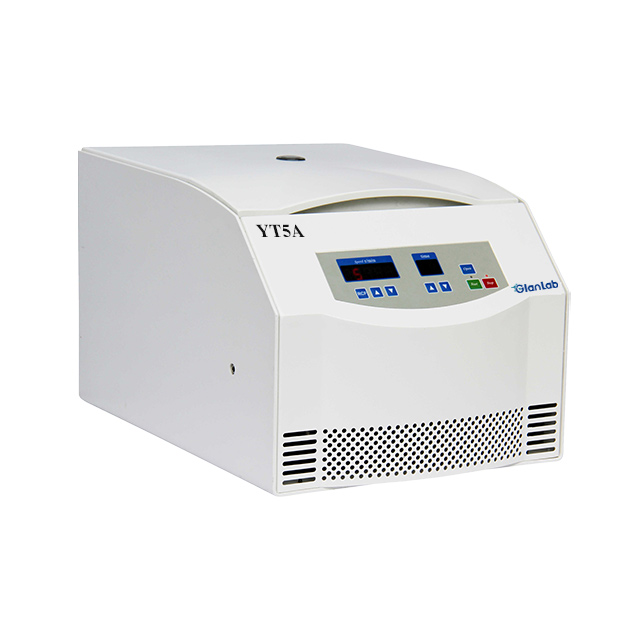
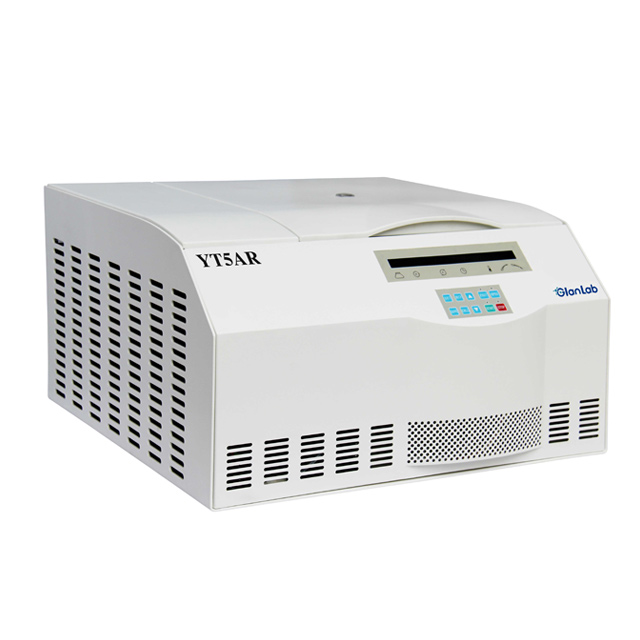
GlanLab YT5A and YT5AR both reach 5,000 rpm, 4,730 ×g and a maximum capacity of 4 × 300 mL. But the refrigerated version is a substantially different system.
NON-REFRIGERATED GlanLab YT5A
Max Speed: 5,000 rpm
Max RCF: 4,730 ×g
Max Capacity: 4 × 300 mL
Net Weight: 52 kg
AC 220V / 110V
3A configuration
View YT5A → REFRIGERATED GlanLab YT5AR
Max Speed: 5,000 rpm
Max RCF: 4,730 ×g
Max Capacity: 4 × 300 mL
Temperature: -20°C to 40°C
Net Weight: 118 kg
15A configuration
View YT5AR → The refrigerated model adds a refrigeration system, temperature sensing and control, additional internal structure, higher electrical demand and a larger, heavier machine.
So the better question is not: “How much extra does refrigeration cost?”
It is: “Does my sample actually need temperature control during centrifugation?”
If it does not, a non-refrigerated low-speed centrifuge may be more economical. If temperature control is essential, compare suitable refrigerated centrifuge configurations with each other.
The Rotor Is Often the Reason Two “Centrifuge Prices” Are Not Comparable
A common purchasing assumption is that the centrifuge price automatically includes the rotor needed for the application.
That assumption can make a low machine price look better than it really is.
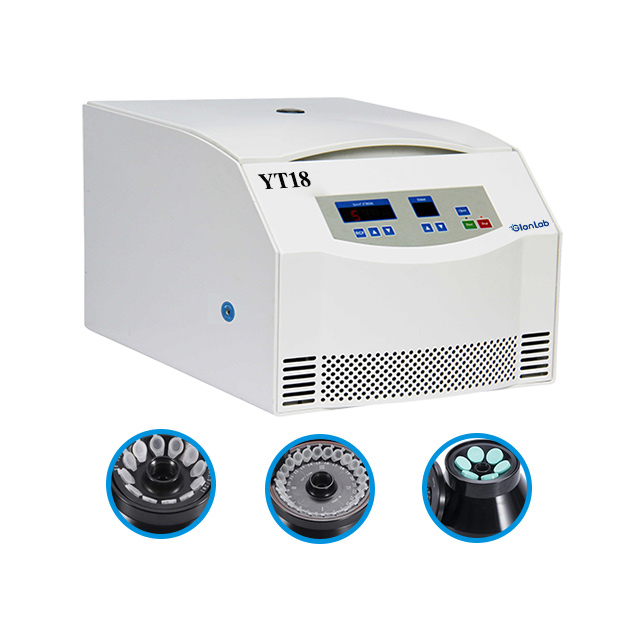
GlanLab YT18 shows why the rotor must be included in the quotation comparison.
The same centrifuge platform supports rotor configurations ranging from 4 × 800 mL swing rotors and microplates to PCR and high-speed microtube rotors.
4 × 800 mL 96-Well Plates Vacuum Tubes PCR 0.5 mL 1.5 / 2 mL 15 mL 50 mL
These rotors do not share the same maximum RPM, RCF or capacity. A quotation for “YT18” is therefore incomplete until the rotor is identified.
View YT18 rotor configurations → Before comparing prices, confirm: Which rotor is included? What RCF does that rotor deliver? Does it fit the actual vessel? Are adapters required? Will another application require a second rotor later?
Machine + Rotor + Adapters + Required Accessories = Usable Configuration
Large Capacity Changes More Than the Number of Samples per Run
Capacity affects centrifuge price, but not simply because one rotor holds more tubes than another.
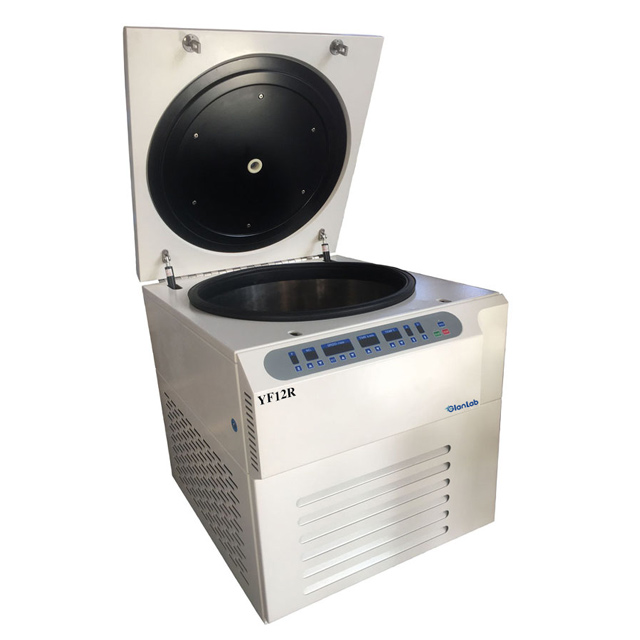
Example: GlanLab YF12R
YF12R combines high-speed capability, refrigeration and large-capacity rotor options in a floor-standing system.
12,000 rpm
Maximum speed
22,650 ×g
Maximum RCF
4 × 1000 mL
Maximum capacity
-20°C to 40°C
Temperature range
260 kg
Net weight
Floor-standing
System class
View YF12R → At an even larger scale, GlanLab YD7MR supports up to 6 × 2400 mL, uses a refrigerated system, requires 380V power and weighs approximately 380 kg.
At this level, increasing capacity can also change: rotor size, chamber size, structural load, machine footprint, electrical requirements, freight cost and installation planning.
That is why a standard benchtop centrifuge and a large-capacity centrifuge should not be compared simply by unit price.
If the actual need is higher centrifugal force rather than higher throughput, review suitable high-speed centrifuge options separately.
Do Not Pay for Maximum RPM You Do Not Need
A higher specification is not automatically a better purchase.
If your protocol only requires moderate RCF, buying a much higher-speed centrifuge may increase the purchase price without improving the actual separation result.
A practical procurement principle: Buy the lowest sufficient specification that reliably covers the required workflow, with enough flexibility for realistic future needs.
That is different from simply buying the cheapest machine. The objective is to avoid both under-specification and unnecessary over-specification.
If you are still comparing RPM with centrifugal force, read RPM vs RCF in Centrifuges: What Lab Buyers Should Know .
Normalize the Quote Before You Compare the Price
When two or three suppliers are being compared, put every quotation into the same structure first.
| Compare This | Supplier A | Supplier B | Supplier C |
| Centrifuge model | | | |
| Refrigerated / non-refrigerated | | | |
| Required RCF achieved? | | | |
| Usable capacity | | | |
| Included rotor | | | |
| Rotor maximum RCF | | | |
| Vessel compatibility | | | |
| Adapters included? | | | |
| Other accessories | | | |
| Voltage / frequency | | | |
| OEM / branding requirement | | | |
| Documentation scope | | | |
| Spare-parts scope | | | |
| Packaging | | | |
| Incoterm / freight | | | |
| Warranty / support | | | |
| Comparable total cost | | | |
The lowest machine price is not automatically the lowest complete quote. If one supplier includes the correct rotor and adapters while another quotes only the centrifuge body, the headline prices should not be compared directly.
Six Costs Buyers Commonly Forget to Confirm
These are not necessarily “hidden fees.” More often, they are items that were never clearly defined in the original enquiry.
Rotor Confirm the exact included rotor instead of assuming the displayed machine price includes the one you need.
Adapters A compatible rotor does not always mean every tube format can be used without additional adapters.
Second Rotor A future PCR, blood-tube or large-volume workflow may require another rotor even when the machine stays the same.
Refrigeration Temperature control can change machine size, weight, electrical demand and freight.
Spare Parts Future access to rotors, adapters and service parts affects the real lifecycle cost.
Freight & Import A 50 kg benchtop unit and a 300 kg floor centrifuge are completely different international shipping projects.
Does “Factory Price” Always Mean a Lower Final Cost?
Not automatically.
Buying directly from a centrifuge supplier in China can make it easier to discuss rotor configuration, OEM requirements, accessories and repeat B2B orders.
But international buyers may also need to arrange freight, import procedures and local service themselves.
A local distributor may have a higher unit price, but may also provide local inventory, faster delivery, local communication or service resources.
Compare the purchasing model, not only the machine price. The best source is the one whose total cost, support structure and supply model fit the project.
OEM / ODM Does the quote include private label or customization? Separate branding costs from rotor, electrical or technically significant changes.
Review OEM & ODM centrifuge options → When Is the Lower-Cost Centrifuge Actually the Better Choice?
A professional buying guide should not always push the more expensive model.
A Simpler Model May Be Enough If:
- The workflow does not require refrigeration.
- The required RCF is moderate.
- Daily throughput is limited.
- Only one common vessel format is used.
- No complex rotor flexibility is needed.
- The workflow is stable and well defined.
Investigate a Low Quote Further If:
- The included rotor is not identified.
- The actual vessel has not been checked.
- Only maximum RPM is provided.
- Refrigerated and standard machines are being compared directly.
- Voltage or destination configuration is unclear.
- Future rotor or spare-parts supply cannot be explained.
A lower price is useful when it comes from removing features you genuinely do not need.
It is much less useful when the lower price comes from an incomplete configuration.
Distributors Should Calculate Centrifuge Cost Differently
For a distributor, the purchase invoice is only the beginning.
Purchase Cost + Support Cost + Future Supply Cost
After the centrifuge is sold, customers may ask whether another rotor is available, whether a new tube format needs an adapter, whether spare parts can still be supplied, or which configuration they originally purchased.
If the supplier cannot answer these questions easily, the cost is transferred to the distributor's own team.
For repeat B2B purchasing, product identification, rotor availability, accessories, spare parts and technical support should therefore be treated as part of the real procurement value.
Can You Tell a Centrifuge Supplier Your Budget?
Yes — but the budget becomes much more useful when it is paired with the requirements that cannot be compromised.
Instead of:
“Please recommend your cheapest centrifuge.”
Try:
“We have a limited budget, but the centrifuge must process 24 × 10 mL blood tubes, achieve the required RCF and does not need refrigeration.”
That allows the supplier to remove unnecessary refrigeration, excessive high-speed capability or oversized rotor capacity while keeping the functions the application actually requires.
Do Not Ask for the Lowest Price Until You Know What You Need to Buy
Laboratory centrifuge prices can vary widely, but the difference rarely comes from one specification alone.
The real cost is shaped by machine class, refrigeration, RCF, capacity, rotor, adapters, accessories, market configuration, freight and long-term support.
A useful B2B quotation should let you answer:
What exactly am I buying?
Can it perform the required workflow?
What else will I need to purchase later?
Once those answers are clear, the price comparison becomes meaningful.
Request a Centrifuge Quote Based on the Actual Application
Send the application and vessel information you already have. GlanLab can first help confirm the centrifuge, rotor and adapter direction before preparing the quotation.
Application Sample / Vessel Vessel Dimensions Required RCF Capacity Temperature Destination Country Voltage / Frequency Quantity OEM Requirement
Request a Centrifuge Quote